
Optimising Terminal Safety for Changi Airport Skytrain, Singapore
Overview
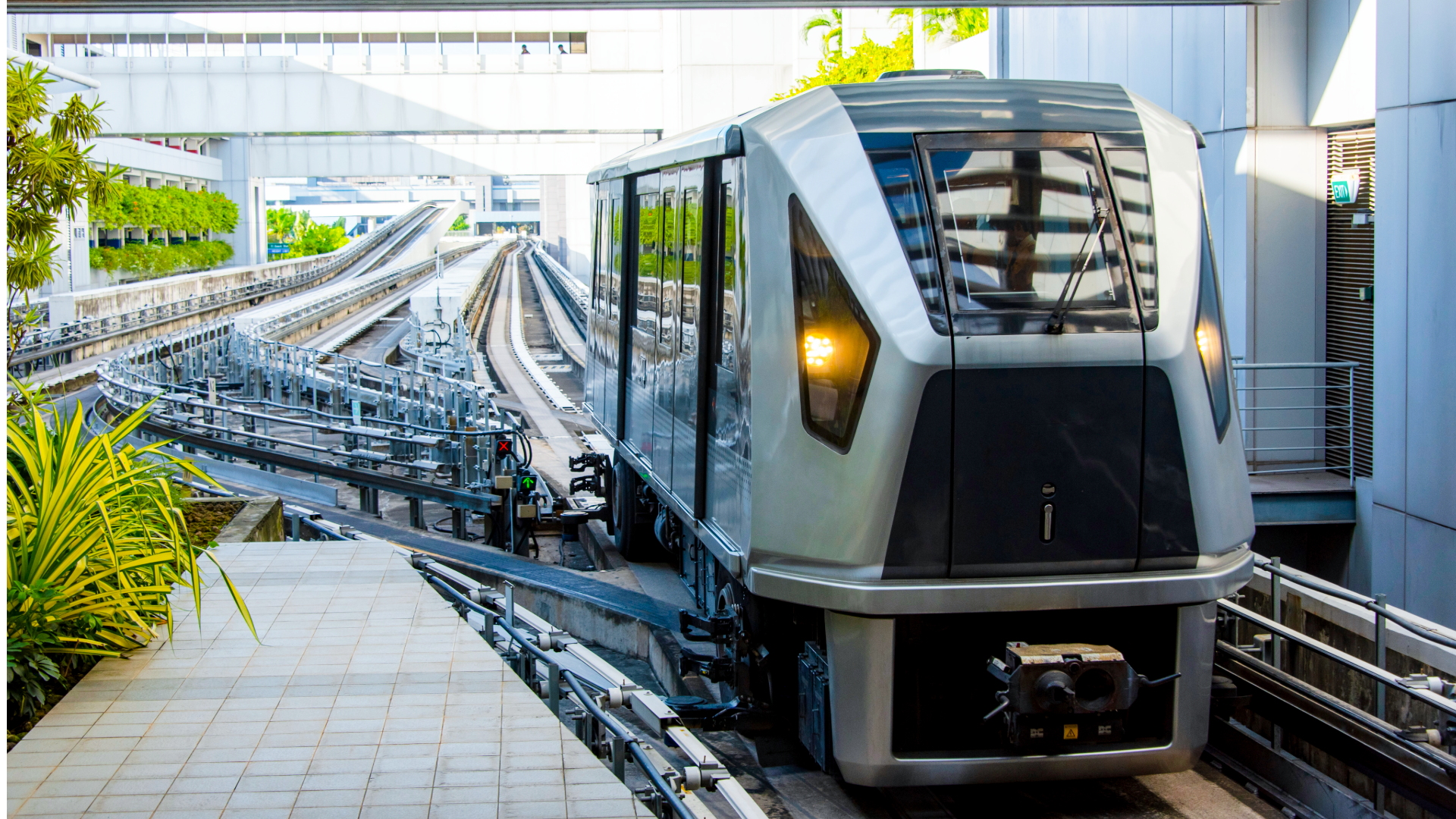
Singapore Changi Airport is globally recognised as a premier aviation hub and is consistently ranked among the world’s best airports. To maintain seamless, high-throughput passenger flow across its expansive footprint, the airport relies heavily on its Skytrain system – an Automated People Mover (APM) that efficiently transports travelers from terminal to terminal.
Characterised by an innovative, futuristic vehicle design, the Skytrain serves as a critical transit link connecting Terminals 1, 2, and 3. To accommodate continuous airport expansion and integrate a new gateway, the existing system underwent a unique architectural transformation. This required retrofitting the structural framework of the live, operational transit lines to establish a fully unified network across all three major terminals, all while preserving the high density and continuous flow of the airport environment.
Challenge
Operating an automated, driverless transit system within one of the world’s busiest airports introduces highly specialised safety and spatial constraints:
- High-Frequency Passenger Volumes: Because the Skytrain operates as a fully driverless system at extremely close intervals, the end-of-travel failsafes must be exceptionally robust to handle high-consequence emergency impact scenarios.
- Delicate Infrastructure and Rolling Stock: The safety system needed to interface seamlessly with the lightweight, rubber-tyred Mitsubishi ‘Crystal Mover APM’ vehicles. The collision forces had to be precision-managed to safeguard the train’s advanced internal components, prevent passenger injury, and avoid structural damage to the elevated terminal guideways.
- Severe Spatial Constraints: Airport terminal platforms are high-value real estate. Traditional, bulky mechanical buffer stops require significant physical footprint, which would reduce valuable passenger space and disrupt optimised depot/gate layout.
Solution
Oleo utilised its global expertise in APM terminal protection to provide a technical solution for Mitsubishi Heavy Industries tailored to the precise energy absorption profiles of the Mitsubishi Crystal Mover vehicles.
By leveraging advanced multi-body dynamic simulation analysis, Oleo modeled the exact mass and velocity profiles of the rolling stock under emergency overtravel scenarios, submitting comprehensive simulation reports for full design validation.
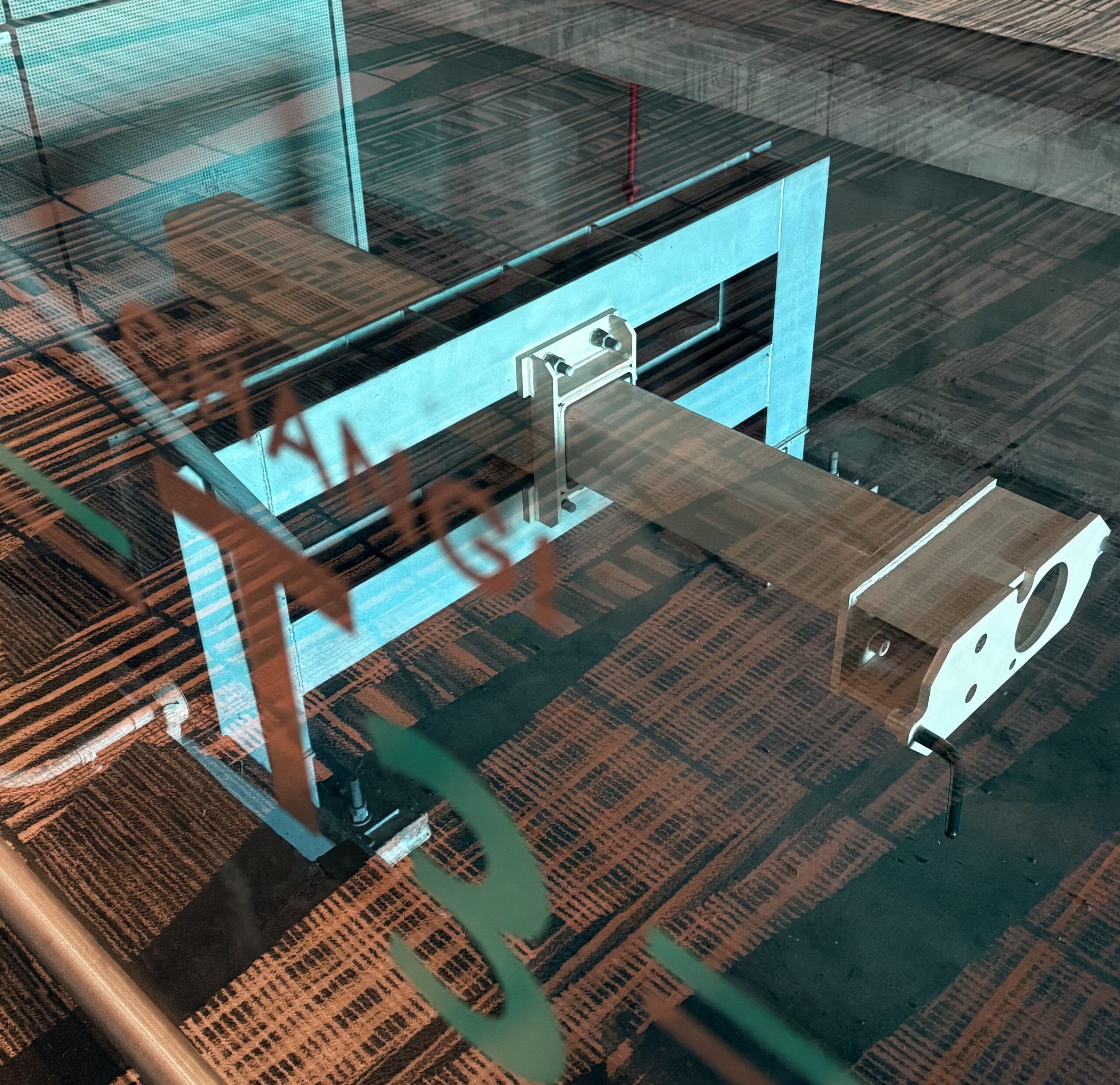
Oleo supplied a bespoke, high-efficiency Type 718 Fixed Hydraulic Buffer Stop System at the end of the Changi Skytrain terminal lines. Instead of relying on passive, oversized structural barriers, this advanced gas-hydraulic solution actively manages the physics of a crash through precision-engineered internal metering.
Technical Performance Benchmarks:
- Vehicle Compatibility: Specially designed to perfectly match the chassis and bumper height of the Mitsubishi ‘Crystal Mover APM’ fleet
- Controlled Damping Force: Regulates a maximum end force of 700 kN, ensuring the vehicle is brought to a controlled, predictable stop without exceeding the structural limits of the platform or the train
- Extended Energy Dissipation: Features a maximum stroke (compression) length of 1800 mm to progressively absorb massive kinetic energy and drastically lower deceleration forces
- Immediate Operational Readiness: The Type 718 system is fully recoverable after impact, automatically resetting itself back to its original extended position to eliminate facility downtime following an event
Conclusion
By selecting Oleo’s space-saving Type 718 fixed hydraulic buffer stops, Changi Airport successfully future-proofed its inter-terminal transit network without sacrificing critical square footage within the airport terminals.
This project reinforces Oleo’s position as the premier global specialist for advanced, space-optimised energy absorption solutions in high-profile, automated urban and airport transit systems.